- According to McKinsey & Company, affluent investors' preference for holistic advice rose from 29% in 2018 to 52% in 2023, driven by several cultural shifts.
- 82% of affluent advice seekers now prefer a single financial provider for integrated solutions.
- Younger investors (25-40) tripled consolidation preferences, from 20% in 2018 to over 70% in 2023.
- Consolidating financial advice into one team is viewed by many as helping to optimize outcomes by avoiding siloed blind spots and redundant strategies.
As wealth continues to expand across the U.S., affluent families are demanding more from their advisors, accelerating the industry’s move toward a business model that can address their full financial picture with greater precision and purpose. Investors’ needs have grown more complex, driving the desire for fully integrated advisory solutions — providers that can shine a light on multiple aspects of their finances, allowing for better decision-making and support of multigenerational goals.
This shift is well under way. A recent report by McKinsey & Company describes a rapidly converging industry in which the traditional boundaries between investment management, private banking, and financial planning are blurring.[1] What has emerged is a new paradigm of integrated platforms that act as single, cohesive advice hubs.
The data confirms this trend: In 2018, 29% of wealth clients preferred holistic advice; by 2023, that number had climbed to 52%.[2] Research firm Cerulli corroborates this dynamic, stating that 82% of affluent “advice seekers” now prefer to work with a single financial provider.[3]
High-net-worth clients, especially among rising-generations, are consolidating relationships and seeking more comprehensive, human-centered guidance. The result is a movement toward a unified, one-stop advisory experience.
The Factors Driving Change
We believe several cultural shifts have stoked rising demand for a more integrated approach to wealth management:
- Financial Complexity: Today’s investors have increasingly intricate financial lives.[4] Their needs often extend beyond traditional financial advice categories to include areas such as alternative investments, concentrated stock positions, trusts and philanthropic efforts, creating a web of interwoven interests and tax implications. With this level of complexity, siloed advice can lead to blind spots and poor decision making. A single, coordinated advisory team helps clients avoid these pitfalls by providing cohesive, well-informed recommendations.
- Rising Expectations for Convenience: Digital tools have revolutionized the advice industry, while, at the same time, raising expectations. For clients, seeing all their accounts on a single screen is no longer exceptional; it is the baseline. What truly matters now is having a human-centered team that can interpret the full context of their financial lives and deliver personalized, multidimensional guidance.[5]
- Behavioral Shifts: Investors with complex lives can grow frustrated managing a patchwork of advisors, portals, and fragmented strategies. Research shows that households with more than $1 million in investable assets are willing to pay a premium for high-touch, comprehensive advisory services.[6] In a nutshell, affluent clients want a more streamlined, integrated approach to managing their wealth.
The Impact of Younger Investors
No group is driving this evolution faster than younger high-net-worth investors. According to McKinsey & Company, the preference for consolidating wealth and banking relationships among clients aged 25 to 40 jumped from 20% in 2018 to over 70% in 2023 — a three-fold increase in just five years.[7] This shift reflects a high level of comfort among younger generations with centralized financial ecosystems in which investments, banking, planning and philanthropy function as part of a purpose-driven whole.
Clarendon Private was Created with Integration in Mind
From its founding, Clarendon Private was designed to bring a range of financial services together for clients seeking a high-touch, holistic experience combined with access to sophisticated investment solutions. While many firms today are pivoting toward consolidation, our philosophy has always been that clients benefit most when one team of trusted advisors truly understands their entire financial picture.
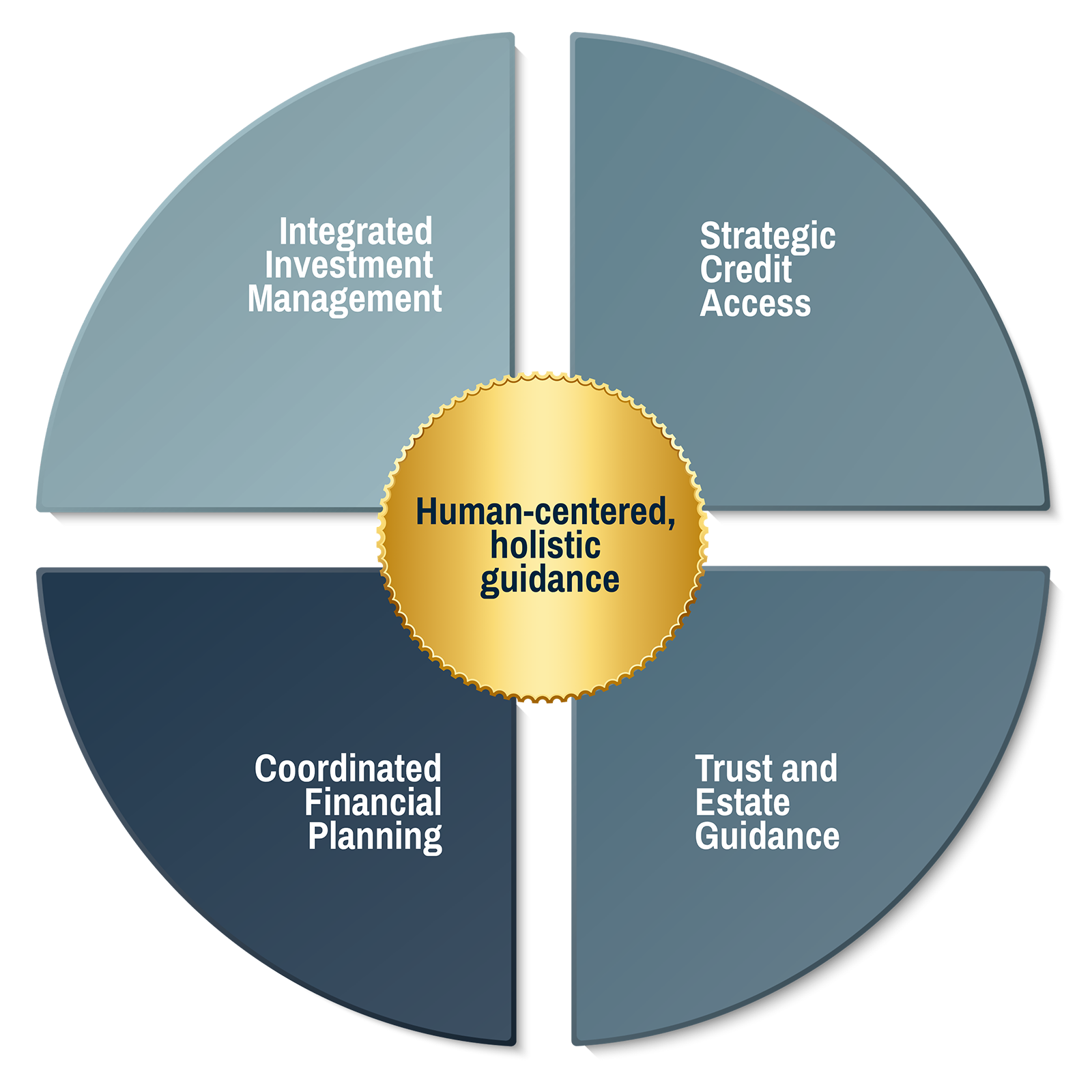
Clarendon Private’s Founder & CEO, Marc A. White, Jr., explains, “Our model is intentionally built around specialists who collaborate across investments, wealth planning and private banking to ensure clients receive guidance that is both coordinated and deeply informed. Because we are a boutique wealth firm, we believe we are better able to develop a greater understanding of each client’s unique needs and goals.”
As an example of this fully integrated approach, Clarendon Private offers private banking and securitized lending capabilities through its bank affiliates. Marc explains, “Our ability to advise clients on both sides of the balance sheet requires a unified team of subject matter experts who can deliver a comprehensive set of solutions.”
Ultimately, it’s about the outcomes
At the end of the day, the real value of an integrated wealth management approach is not convenience. It is the coordinated effort toward superior financial results. A single advisory team that understands a client’s financial circumstances at depth makes it easier to:
- Create proactive, tailored recommendations based on a holistic view of a client’s finances
- Align investment strategies, borrowing and cash flow needs with each client’s long-term goals and risk tolerance
- Avoid the conflicting advice, tax surprises and redundant strategies that can occur when working with multiple firms
The result is a more personalized experience that anticipates clients' needs across each stage of the wealth management lifecycle. Marc sums it up: “Clients deserve a team that can meet them where they are, with the resources and expertise to support every aspect of their financial lives.” This approach is at the core of Clarendon Private’s vision, which emphasizes high-touch service, customized investment solutions and integrated resources tailored to each client’s unique situation.
“Integration isn’t something we are rushing to adopt,” Marc adds. “It has been at the center of our philosophy since day one. As research continues to show, clients are increasingly seeking the very type of holistic experience we have always delivered.”
The future of integrated financial advice
As the wealth landscape evolves, one thing is evident: alignment with the industry’s future is important. At Clarendon Private, we are not scrambling to keep pace with this change. We are building on a foundation that has always centered on comprehensive guidance, seamless collaboration and a deep understanding of each client’s full financial picture.
Clarendon Private, LLC (“Clarendon Private”) is a registered investment advisor. Advisory services are only offered to clients or prospective clients where Clarendon Private and its representatives are properly licensed or exempt from licensure. For additional information, please visit our website at https://www.clarendonprivate.com or the Investment Adviser Public Disclosure website at www.adviserinfo.sec.gov by searching with Clarendon’s CRD # 316616
[1] McKinsey & Company. 2024. “US Wealth Management: Amid Market Turbulence, an Industry Converges.” January 16, 2024.
[2] McKinsey & Company. 2025. “The Looming Advisor Shortage in US Wealth Management.” February 9, 2025.
[3] Cerulli Associates. 2024. “82% of Affluent Investors Prefer a Single Financial Services Provider but Resist Complacency.” Press release, October 15, 2024.
[4] McKinsey & Company, Asset Management 2025: The Great Convergence (New York: McKinsey & Company, 2025).
[5] McKinsey & Company. 2025. “The Looming Advisor Shortage in US Wealth Management.” February 9, 2025.
[6] McKinsey & Company. 2025. “The Looming Advisor Shortage in US Wealth Management.” February 9, 2025.
[7] McKinsey & Company. 2024. “US Wealth Management: Amid Market Turbulence, an Industry Converges.” January 16, 2024.